On our terms
2024
An installation that turns the terms of service around. Visitors choose a platform, write what they expect from it and what it can expect from them, and sign. The page turns the letter into an email addressed to the company. Made in forty-eight hours at Art Hack Day: Dethrone, Gray Area, San Francisco.
- Fletcher Bach
- Vidya Giri
- Anna Zhang
- Andrew Johnson
- Tatjana Kudinova
- Photographs: Fletcher Bach, Anna Zhang and the team
The idea
Terms of service are contracts that only one side writes. You scroll, you accept, and the platform takes broad rights over what you post and what it learns about you. The terms can change without your consent. You cannot answer back.
Art Hack Day gave some forty artists forty-eight hours and one word: dethrone. Five of us spent them reversing the direction of the contract. In On our terms the user writes the terms and the platform is asked to agree.
The piece
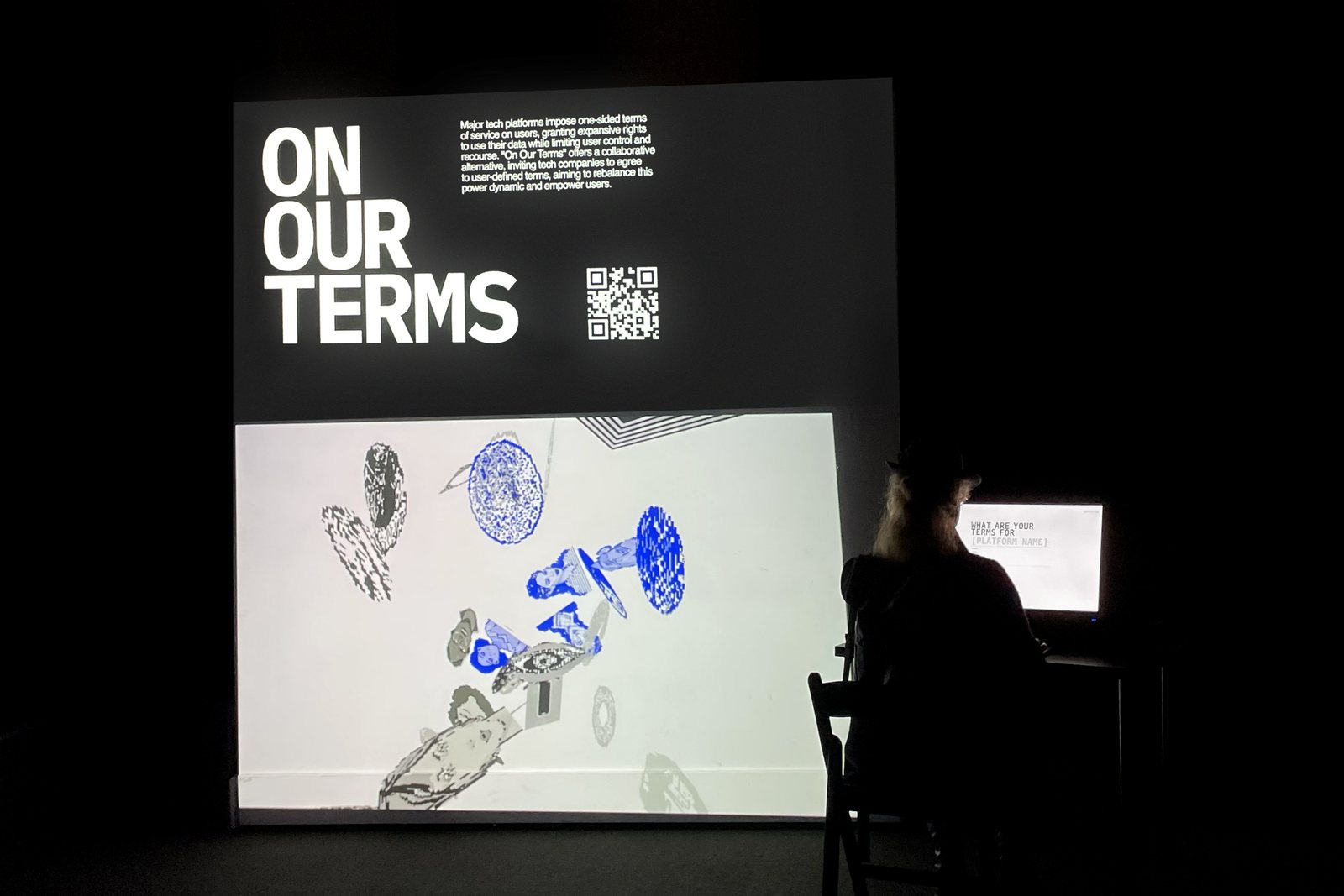
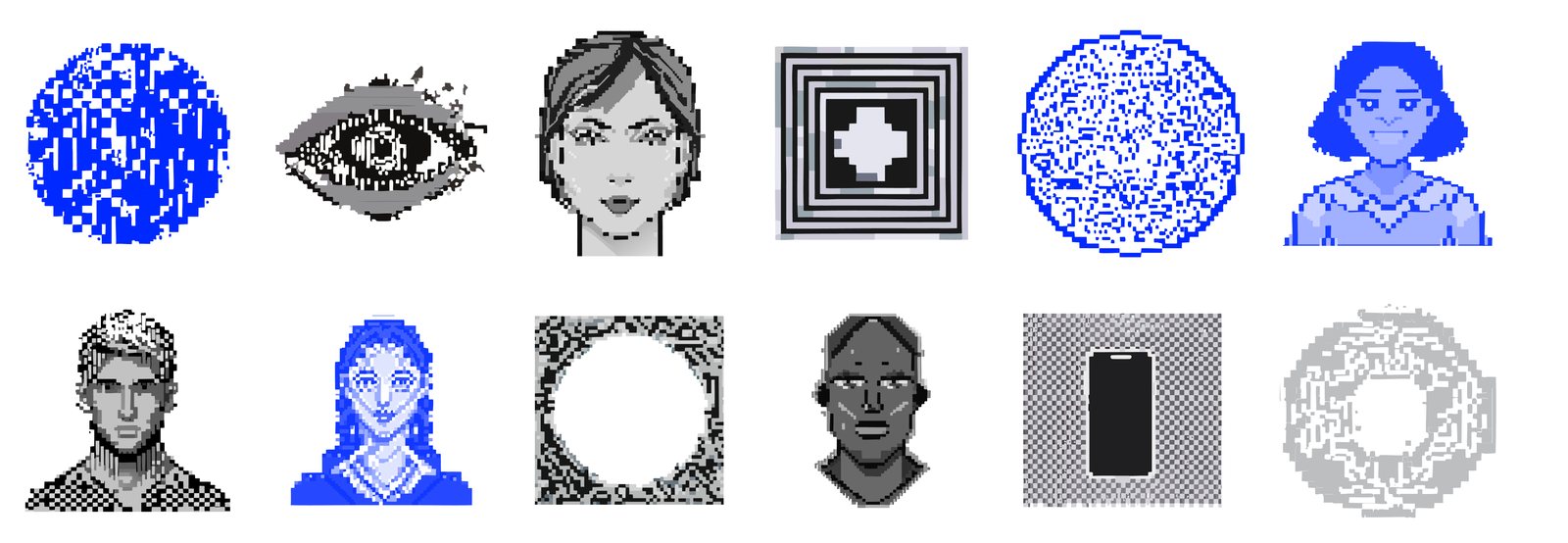
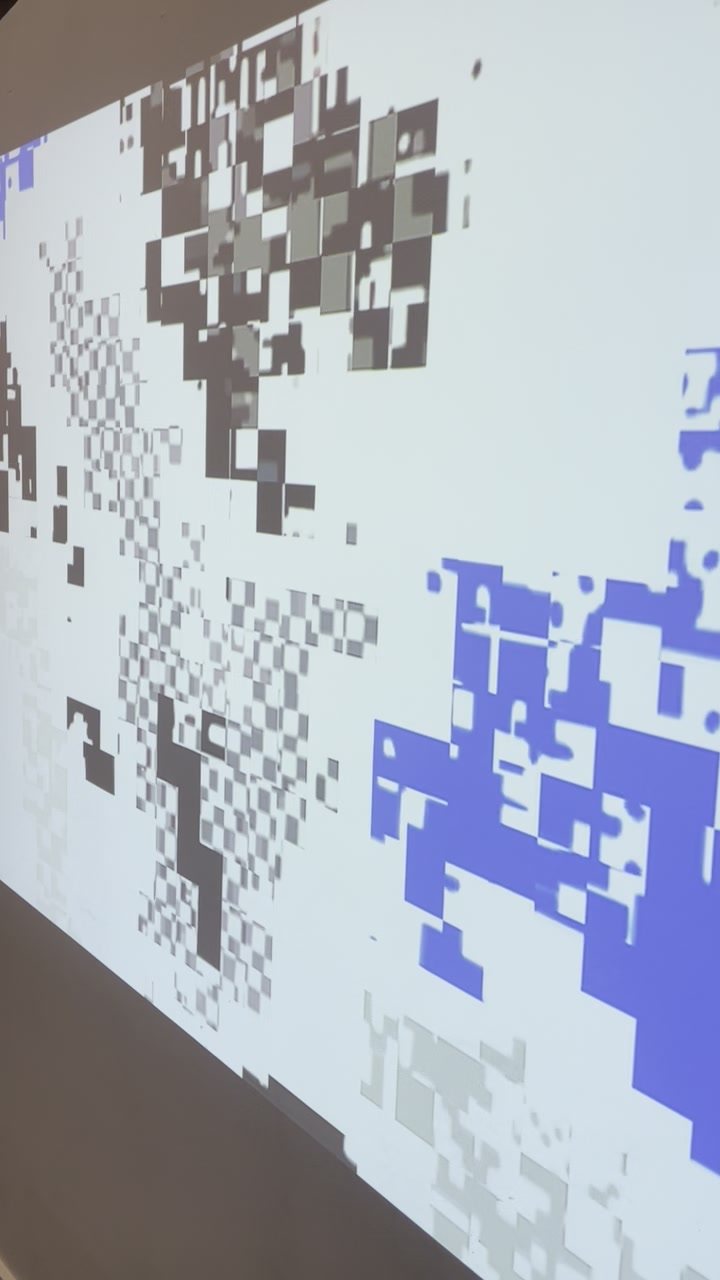
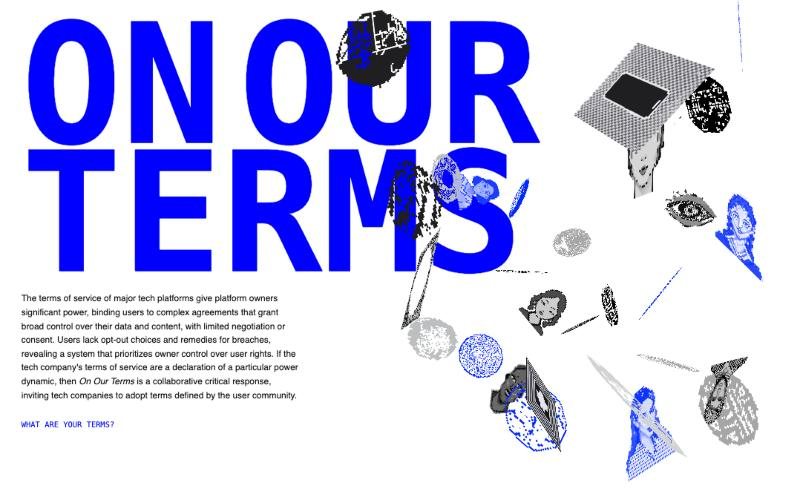
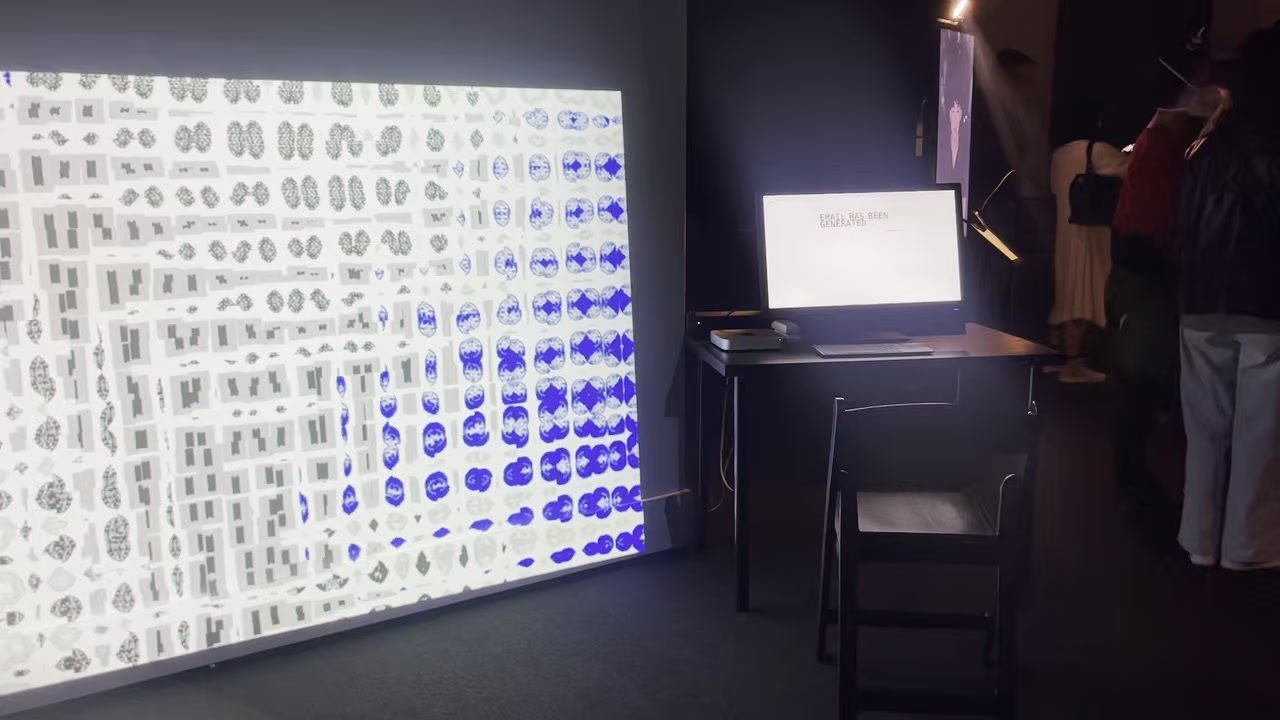
Two projections sat one above the other in Gray Area’s Grand Theater, with a desk beside them. The upper one held the title, a short statement and a QR code. Below it ran an animation of pixel icons: eyes, phones, portraits and patterned discs in black, grey and one blue, breaking into blocks and settling into a grid.
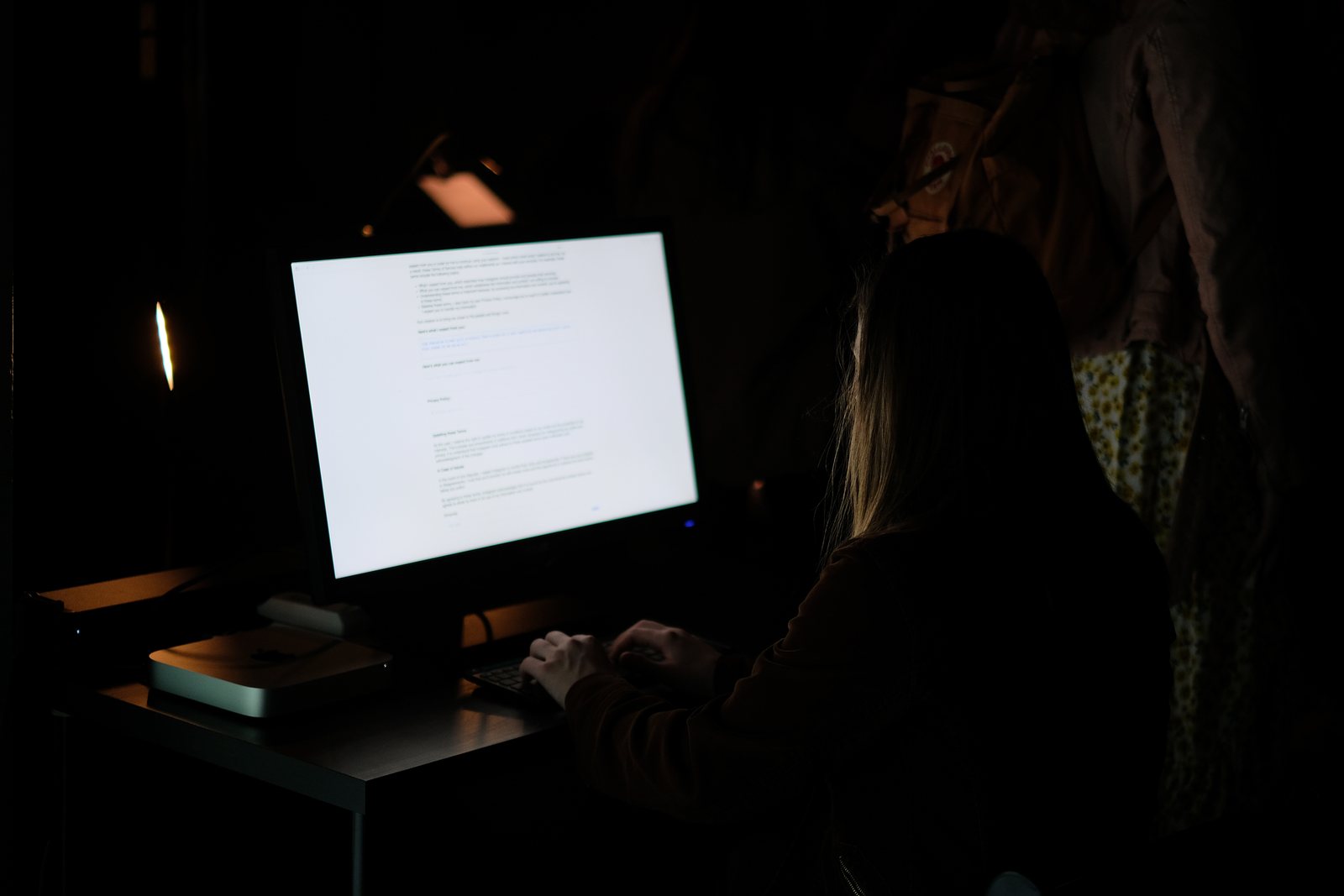
The desk held a screen with one question: what are your terms for [platform name]? Choose Instagram, Facebook, TikTok, Twitter/X or Snapchat and the page becomes a letter in the platform’s own legal voice, turned around. “Dear Instagram, I know it’s tempting to skip these Terms of Service, but it’s important for you, Instagram, to understand what I expect from you in order for me to continue using your platform.” The company’s mission statement comes back in the first person: “Your mission is to bring me closer to the people and things I love.”
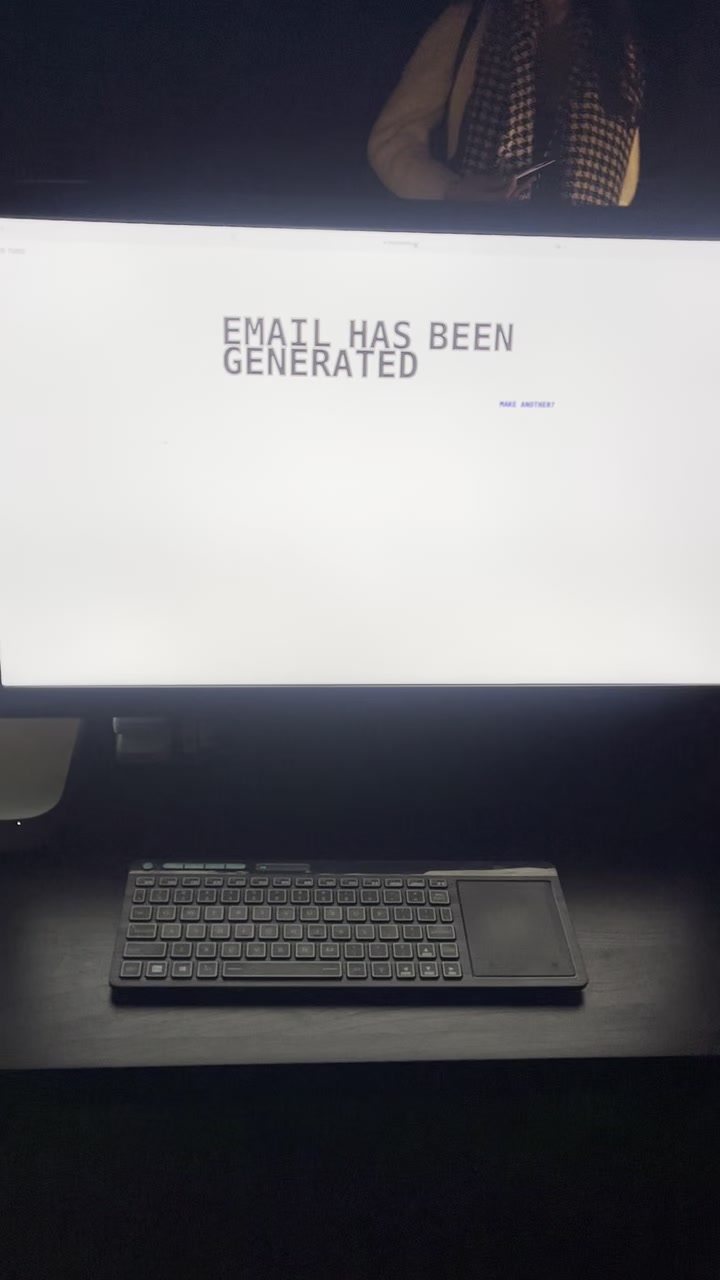
Two blanks follow: here’s what I expect from you, and here’s what you can expect from me. Then the boilerplate, also reversed: “By agreeing to these terms, Instagram acknowledges that it is bound by the commitments outlined above and agrees to abide by them in its use of my information and content.” Sign it, press submit, and the letter becomes an email addressed to the platform’s support inbox. The screen answers: email has been generated. Make another?
Forty-eight hours
The team formed on the first evening. We collected the terms of Instagram, Facebook, TikTok, X, Snapchat, Google and Reddit, asked ChatGPT to rewrite two of them from the user’s side, and cut the result down to one letter that fits any platform. By the time the doors opened there was a working web app, two projections and a desk.
My part was the projected animation, made with Andrew Johnson in Keynote and exported as video for the projector.
On the night
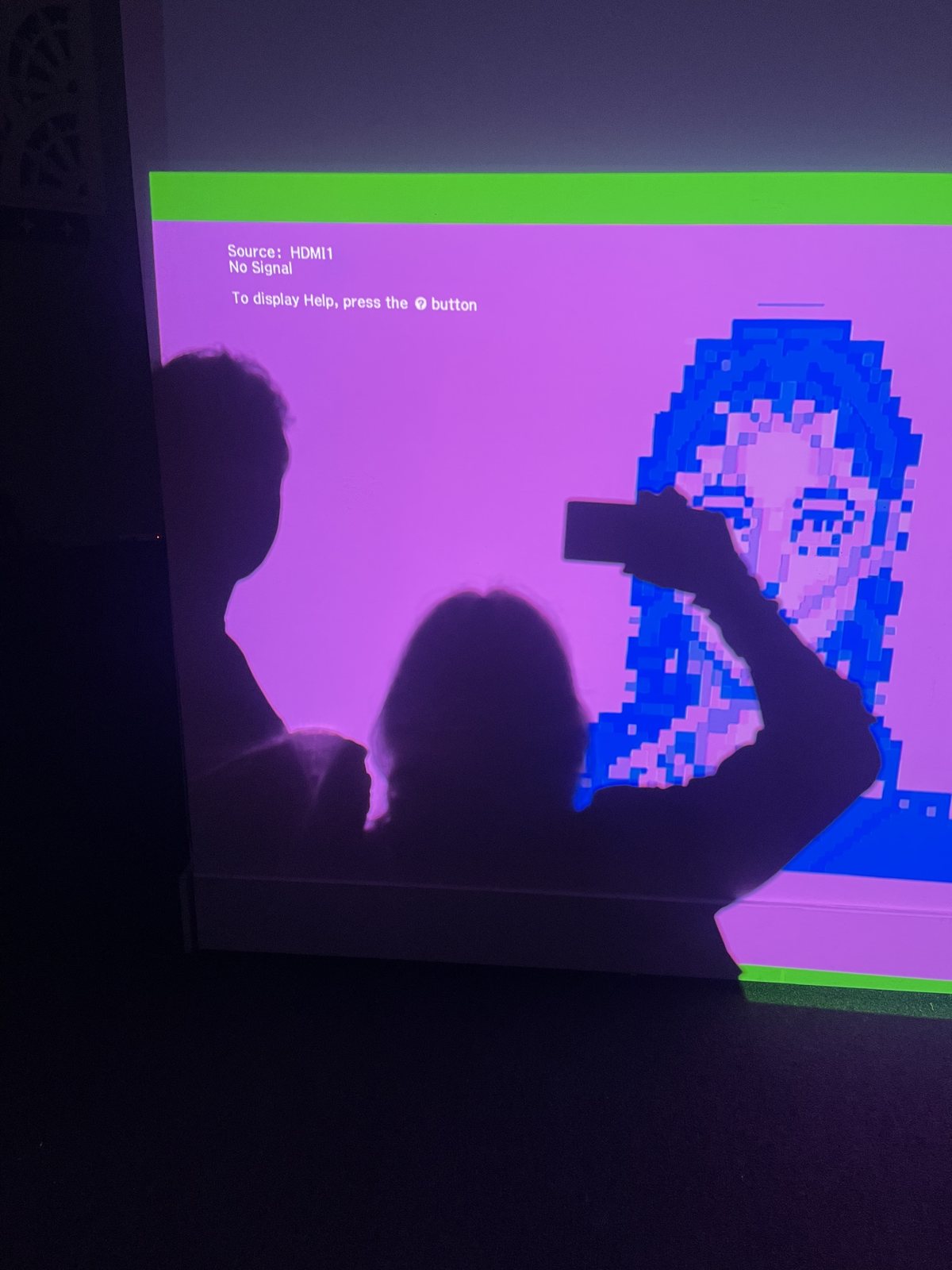
The exhibition ran for one evening, 24 February 2024. People gathered at the desk and wrote while others read over their shoulders. A fellow participant’s published account singled the piece out as one of the few overtly political works in the show and called it “a creative and excellent interpretation of the theme”.
The feedback I heard was specific. Visitors wanted longer with the two questions, and examples to start from. Some had not expected submit to produce a real email to a real company, and did not feel ready to send it.
What I would change
That hesitation is the finding. A contract is a slow document and we had built a fast form. The next version slows down: time to think, examples from other visitors, and a shared thread where people draft terms together before anything goes to a company.